
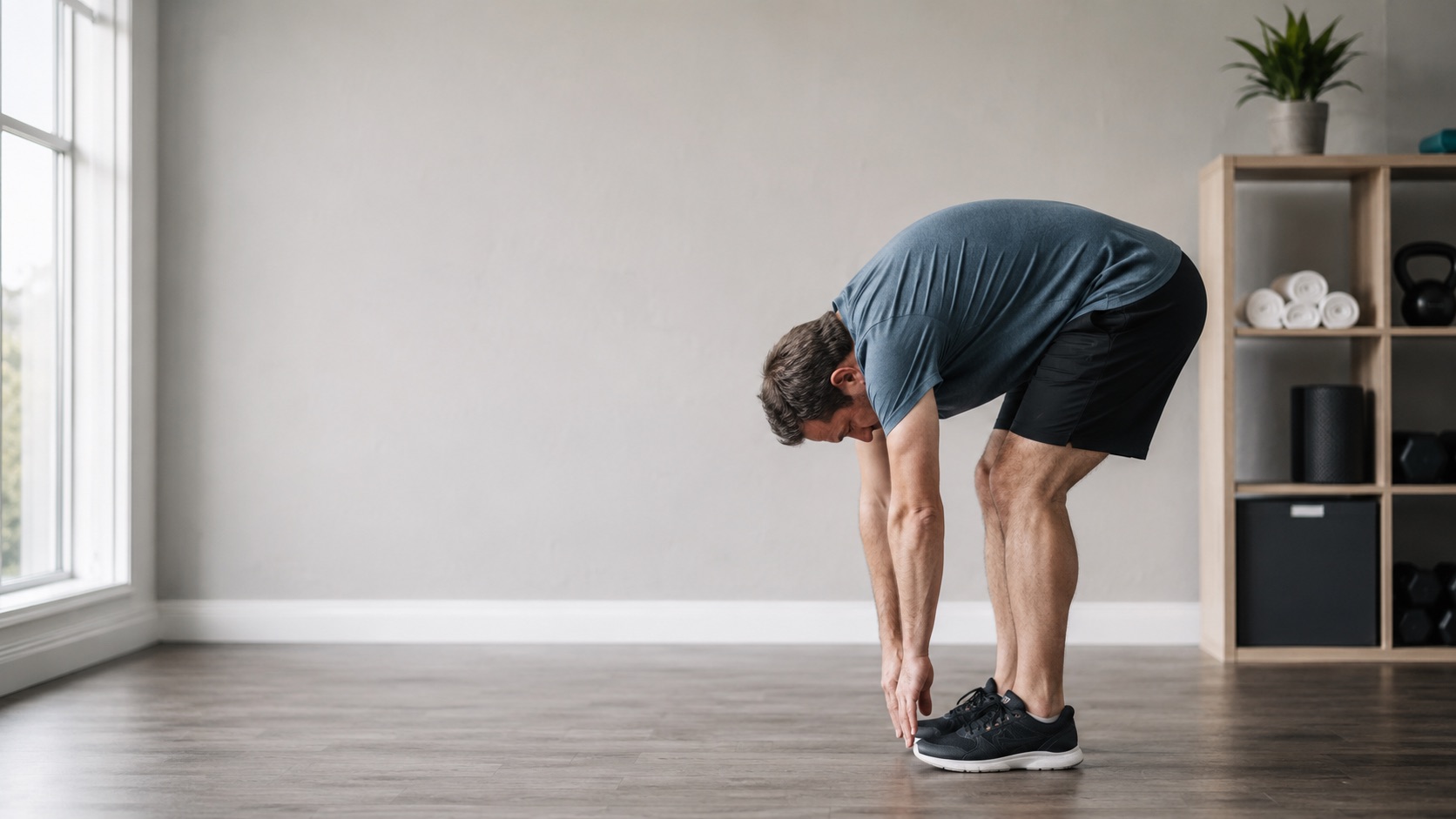
You stretch them every morning. You stretch them at the gym. You stretch them again after a round. And by the next day, your hamstrings feel exactly as tight as they did before. If that's you, here's the part nobody tells you: the stretching isn't failing because you're not doing enough of it. It's failing because tight hamstrings usually aren't a length problem in the first place.
"Tight" is a feeling, not a diagnosis
Tightness is a sensation — something your nervous system produces. It feels like a short, stiff muscle, so we assume that's what it is. But a muscle can feel tight when it's already at full length, and it can feel tight when it's simply working overtime and never getting a break. The feeling is real. The story we tell about it — "the muscle is short, so I need to lengthen it" — is often wrong.
Why the daily stretch keeps letting you down
Muscles aren't rubber bands. When you stretch and hold, you're mostly training your tolerance to the stretch — you can push a little further before it complains. That's why you feel looser for about twenty minutes. What you haven't done is change the reason your body put the brakes on in the first place. So the tightness comes right back, and you're stuck repeating the same fix that never quite sticks.
Here's what's usually really going on
Your hamstrings are one of your body's main brakes. They help control how you fold forward, how you lower into a squat, how you decelerate every time your foot hits the ground. When your body loses the ability to slow itself down smoothly — to hinge and absorb load the way it's built to — the hamstrings clamp down to keep you safe. The tightness isn't the malfunction. It's the alarm going off because of the malfunction somewhere else.
Put simply: your hamstrings probably aren't short. Your body has lost some of its ability to slow itself down, and the hamstrings are covering for it. Stretch the brake all you want — if the reason it's clamped hasn't changed, it clamps right back.
The tell: watch what your body does to cheat
Try to touch your toes and pay attention to how you get there. Do your knees quietly bend? Does one side round more than the other? Does your low back do the work while your hips barely move? Those aren't flaws in willpower — they're your body borrowing range from somewhere else because the real movement isn't available. Those little cheats are the actual clue. They tell us where control was lost, which is the thing worth fixing.
What actually helps — fix the movement, not the muscle
This is the whole philosophy at Taylor Made Integrative Therapy: pain and tightness are symptoms, and we're after the reason underneath them. Instead of chasing the sensation with one more stretch, we look at how you move — how you hinge, how you load each side, how well you can control your body as it slows down. Hands-on work can change how the tissue feels quickly. But the lasting change comes from restoring the movement and the control your body was missing, so the hamstrings don't need to stand guard anymore.
Most people are surprised by how much "tightness" eases when the underlying movement is addressed — without adding a single new stretch. Pain relief is the start. Lasting control is the goal.
When it's worth getting looked at
If your hamstrings feel tight no matter how much you stretch, if one side is always worse than the other, or if the tightness is starting to limit your training, your swing, or your day, that's worth a real look. And if you're feeling pain, numbness, or tingling that travels down the back of your leg — that's a different signal and a good reason to get evaluated sooner rather than later.
Tired of stretching hamstrings that never actually loosen up? Let's find out why. A movement assessment at Taylor Made Integrative Therapy in Fort Worth looks at what your hamstrings are protecting — so we can fix the cause, not just chase the feeling.
Book Your Evaluation →Prefer to talk first? Call or text (817) 523-9590 or email info [at] tmitherapy.com.
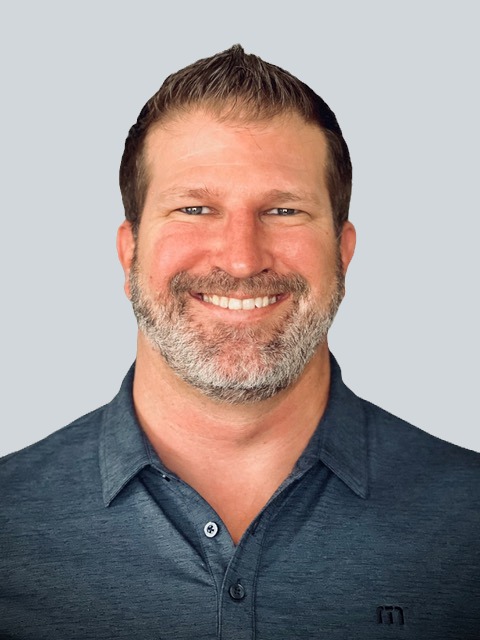
Dr. Taylor is a TPI-certified sports chiropractor at Taylor Made Integrative Therapy in Fort Worth, TX. He helps golfers, athletes, and active adults move better, feel better, and perform at their best — by fixing the movement issues underneath the pain. More about Dr. Taylor →