

It starts at the base of your skull. Usually one side. By mid-afternoon it’s crept up behind your eye, and you’re rubbing the back of your neck without thinking about it.
Long day at the desk? It shows up. Two hours in the car to a tournament? There it is. Grinding over putts on the practice green, or hours with your chin buried in a phone? Same story.
If that sounds familiar, your neck might be contributing to your headache.
One possibility is a cervicogenic headache. “Cervico” means neck, “genic” means coming from. It’s head pain linked to a problem in the neck, often involving the joints at the very top of the spine and the tissues around them. Its symptoms can overlap with migraine, but the cause and the treatment approach may be different.
Read this first
Some headaches and neck pain are medical emergencies. Call 911 or go to the ER now for a sudden, severe headache that reaches full strength within an hour; new weakness, numbness, trouble speaking, confusion, vision loss, double vision or loss of balance; new, unusual one-sided head or neck pain, especially after an injury or a sudden neck movement; fever with a stiff neck; a worsening headache, repeated vomiting or confusion after a head injury; a severe or unusual new headache during pregnancy or after delivery; or a painful red eye with headache. Don’t wait for a chiropractic appointment. The full list of warning signs is at the end of this article.
Neck headache or migraine? How they usually differ
Headaches overlap, and plenty of people have more than one type. But there are patterns worth knowing.
| Feature | Neck headache (cervicogenic) | Migraine |
|---|---|---|
| Which side and where | Usually one side, and it stays on that side from one headache to the next. Starts in the neck or base of the skull, then spreads forward to the temple, forehead or behind the eye | Often one side, but can switch sides between attacks, or affect both sides. Often felt at the temple, forehead or behind the eye |
| How it feels | Usually a steady, dull ache or deep pressure rather than a throb. Mild to moderate | Often throbbing or pulsing. Moderate to severe |
| How long it lasts | Varies. It can last hours or days, and often rises and falls with how much the neck has been loaded | Usually 4 to 72 hours per attack without treatment |
| Other symptoms | Less neck movement, sometimes shoulder or arm discomfort on the same side. Light or sound sensitivity and nausea are usually absent or mild | Nausea or vomiting, and sensitivity to light and sound are common. About 1 in 4 people have an aura, such as visual changes, before or during an attack |
| Neck and upper back | Stiff neck, especially turning. Stiff joints at the top of the neck, tight muscles between the neck and shoulder, and upper back stiffness. Pressing certain upper-neck spots may bring on the familiar headache | Neck and upper back tightness are common too, in about 3 in 4 people in some studies. They often come with the attack, sometimes before the headache starts, rather than causing it |
| What can bring it on | Certain neck movements, long periods in one position such as looking down at a screen, or pressure on the upper neck | Routine physical activity like walking or climbing stairs, bright lights, loud noise, skipped meals, poor or irregular sleep, and hormonal or weather changes |
| What can ease it | Resting or supporting the neck and changing position may help. Hands-on care and neck and upper-back exercise are common treatments. Specialists sometimes use a numbing injection in the neck to help confirm the source | Rest in a dark, quiet room, sleep and fluids. Migraine medicines prescribed by a doctor |
| Who should assess it | A qualified clinician should first screen for other causes. A neck exam can help show whether the neck is contributing | A medical clinician can assess and manage migraine. Neck-focused care may help alongside medical treatment if a contributing neck problem is found |
Here’s the catch: neck pain and stiffness are common with migraine too, sometimes before the headache even starts. So a stiff neck on its own doesn’t tell you which one you have. If you’re the person who’s always cracking your own neck to get some relief, pay attention to that. It’s not proof, but it’s a clue your neck is worth a look.
Think of it like a smoke alarm going off in the kitchen when the toast is actually burning in the toaster. The alarm is in one place; the problem is somewhere else. With a neck headache, you feel it in your head, but part of the source may be lower down. That’s why it’s worth checking whether the neck is involved instead of assuming every headache has the same cause.
One important note: this isn’t a do-it-yourself diagnosis. Migraine is a real neurological condition that deserves a physician’s care, and some people have both. Sorting out what you’re dealing with is the first job of a good evaluation.
Why the neck can cause head pain
Pain signals from the upper neck and signals from the head and face meet in a shared processing area near the brainstem and the top of the spinal cord. That overlap helps explain why a problem in the neck can sometimes be felt as pain in the head.
What can load up those structures? Usually not one big event. It’s more often the slow build:
-
Long static positions. Desk work, driving, studying, screens. Your head may drift forward, and your upper neck tips back to keep your eyes level. Holding that for hours can aggravate symptoms in some people, especially with few movement breaks.
-
Stiff upper back. If your upper back doesn’t rotate well, you may make up for it by moving more through your neck or shoulders. Golfers often notice this in the backswing and follow-through.
-
Deep neck muscles that tire out. You have small stabilizing muscles on the front of your neck (the deep neck flexors). When they lack endurance or control, other neck muscles may work harder. Some of those muscles get tender and can bring on familiar head pain when pressed.
Where neck muscles may refer pain
Green highlights the muscle or muscle group, × marks commonly described trigger points (tight, tender spots in the muscle), and red shows areas where pain may be felt. These are examples of pain patterns described in trigger-point research, not a way to diagnose your headache. Pain patterns vary from person to person, and finding a tender spot doesn’t prove your neck is causing your headache.
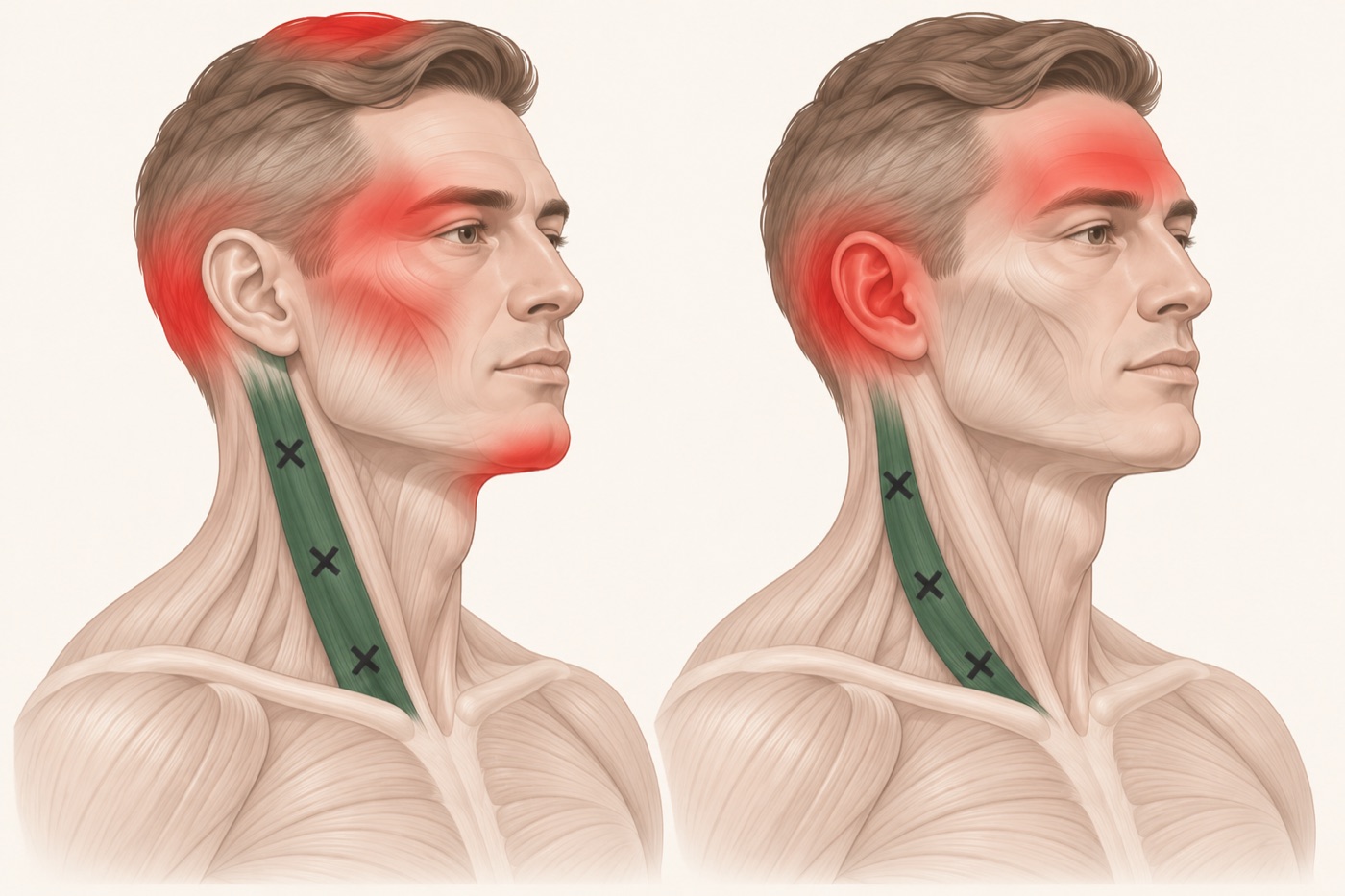
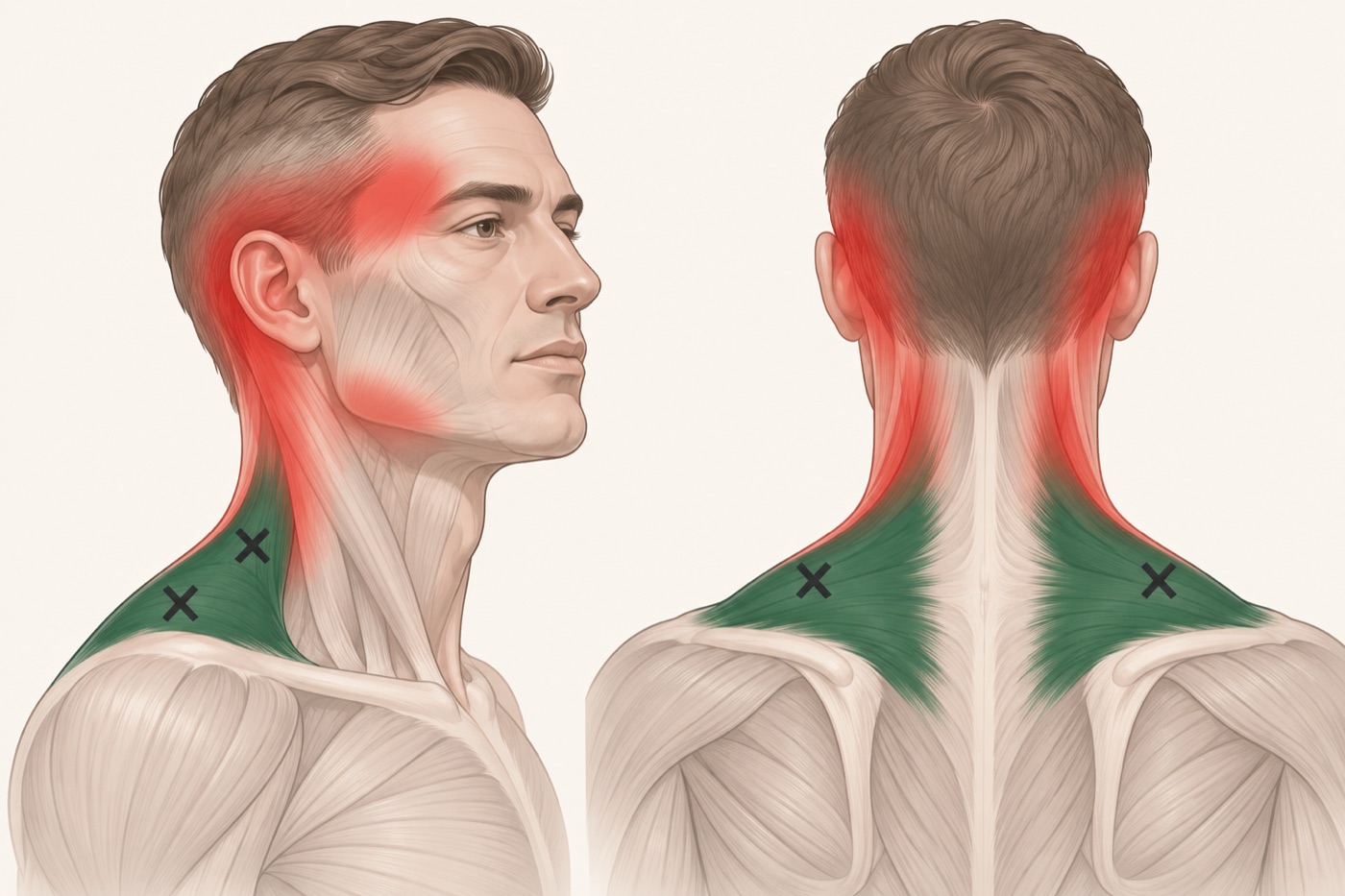
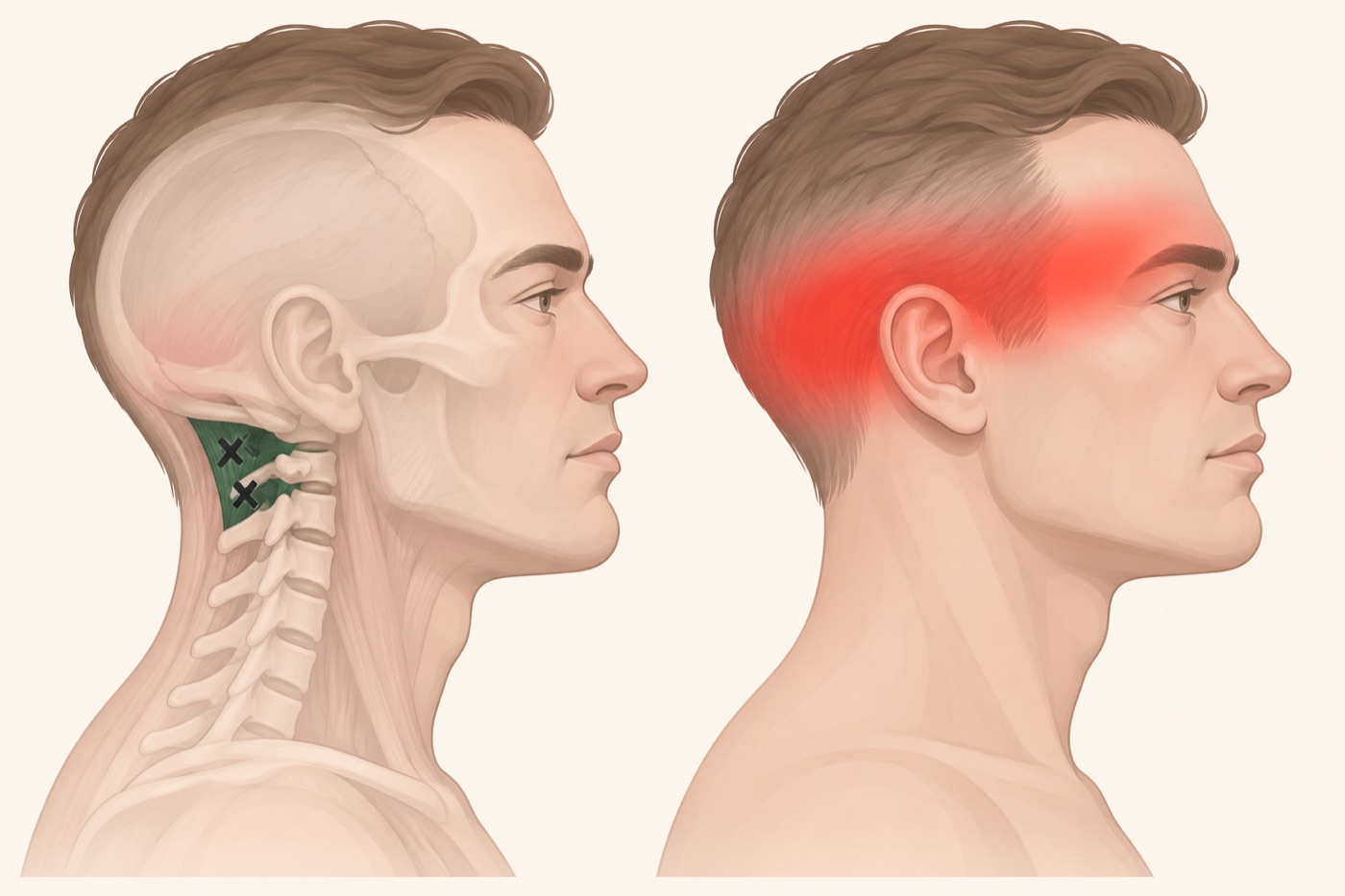
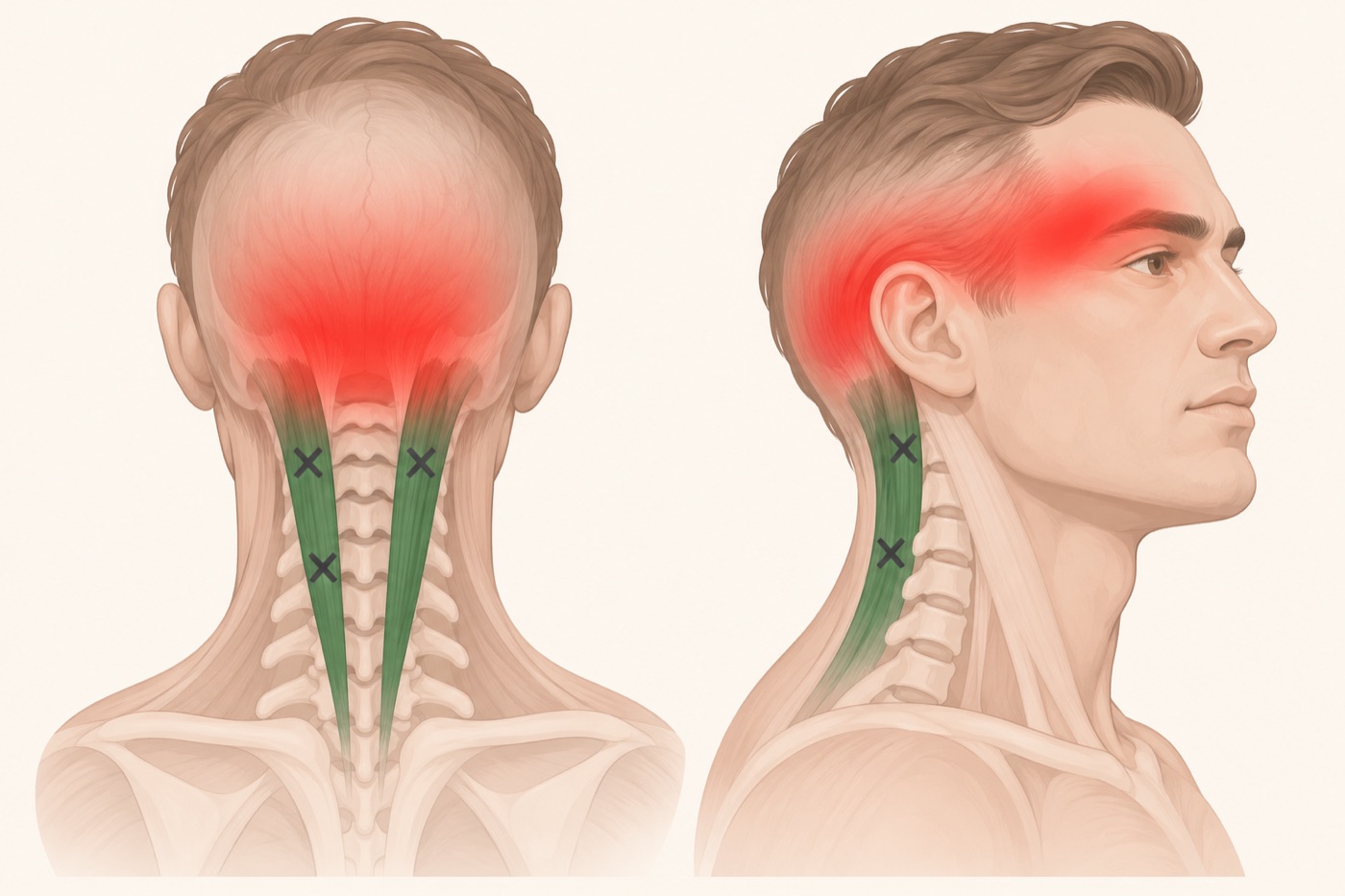
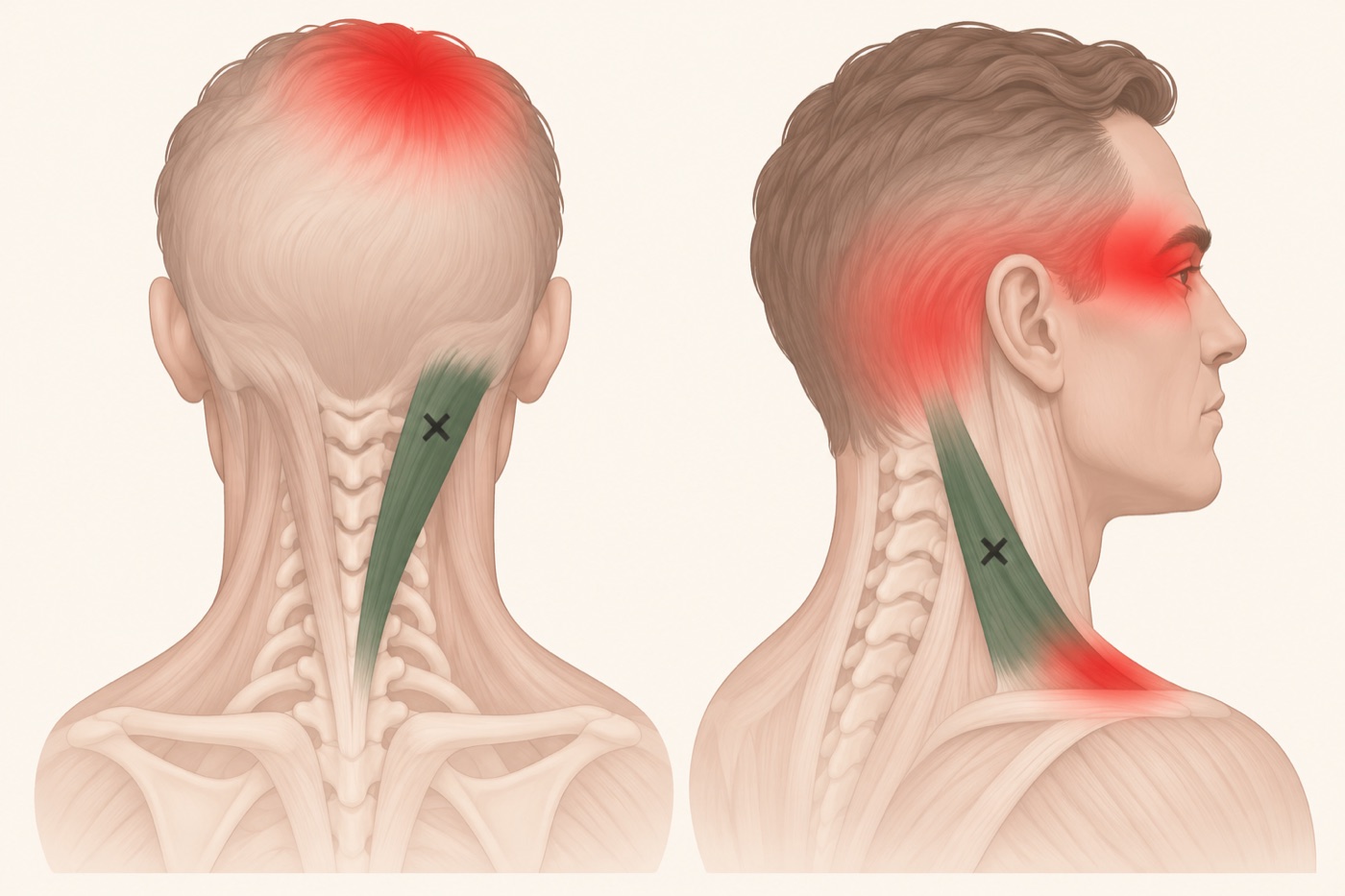
The headache is what you feel. Stiff joints, tired stabilizers and overworked muscles may be part of why it keeps coming back, but finding them doesn’t prove your neck is the cause. Our job is to figure out whether the neck is involved and what we can reasonably do about it.
How we assess it at TMIT
A neck headache evaluation at Taylor Made Integrative Therapy isn’t a quick crack-and-go. It’s a safety screen and a movement assessment, because we want to know what hurts, what might be feeding it, and whether neck-focused care makes sense.
- Safety first. We start with your headache history, your medical risks and a focused neurological exam. We also look for warning signs of blood-vessel problems in the neck. No single office test can rule those out, so if your history or exam raises any concern, we refer you for medical evaluation before any neck treatment.
- Big-picture movement. We look at how your neck bends, extends and turns, and how your upper back and shoulders move with it. A golfer who can’t rotate through the upper back often borrows that rotation from the neck, and we want to see that.
- Upper neck tests. One of the most useful is the flexion-rotation test: we gently tuck your chin toward your chest, which limits movement in the lower neck, then turn your head side to side. That mostly tests rotation at the top pair of neck joints. A clear restriction or side-to-side difference is useful information, but it doesn’t diagnose a cervicogenic headache by itself. We read it alongside your history and the rest of the exam.
- Joint and muscle check. We feel how each segment of the upper neck and upper back moves, and check the muscles that commonly refer pain into the head: the upper traps, the muscles at the base of the skull, the levator scapulae and the SCM in front. If pressing a spot brings on your familiar headache, that’s another clue.
- Deep neck muscle endurance. We test how well those small front-of-neck stabilizers hold up. Low endurance there is common in people with neck-related headaches.
By the end, we’ll explain what your history and tests suggest, whether your neck appears to be contributing, and what the next step should be. Sometimes that’s a treatment plan. Sometimes it’s a referral for further medical evaluation.
What treatment looks like
When the neck appears to be contributing, we work in three steps: ease symptoms, support progress between visits, then build strength that may help maintain it.
Ease symptoms
Hands-on care for stiff joints and tight muscles, rechecked right away.
Support progress
A few simple mobility and control drills that fit your day.
Build the strength
Neck, upper-back and rotation strength that may help maintain progress.
Hands-on first. Gentle mobilization or, when appropriate, adjustment of the stiff upper neck and upper back joints, plus soft tissue work (and dry needling when it fits) on the muscles that refer pain into the head. We recheck your movement right after, so you can tell whether anything changed. With headaches, more isn’t better. We do what’s needed and stop.
Then support your progress. A few simple mobility and control exercises that fit your day, whether that’s at home, at your desk or before a round, to support your progress between visits.
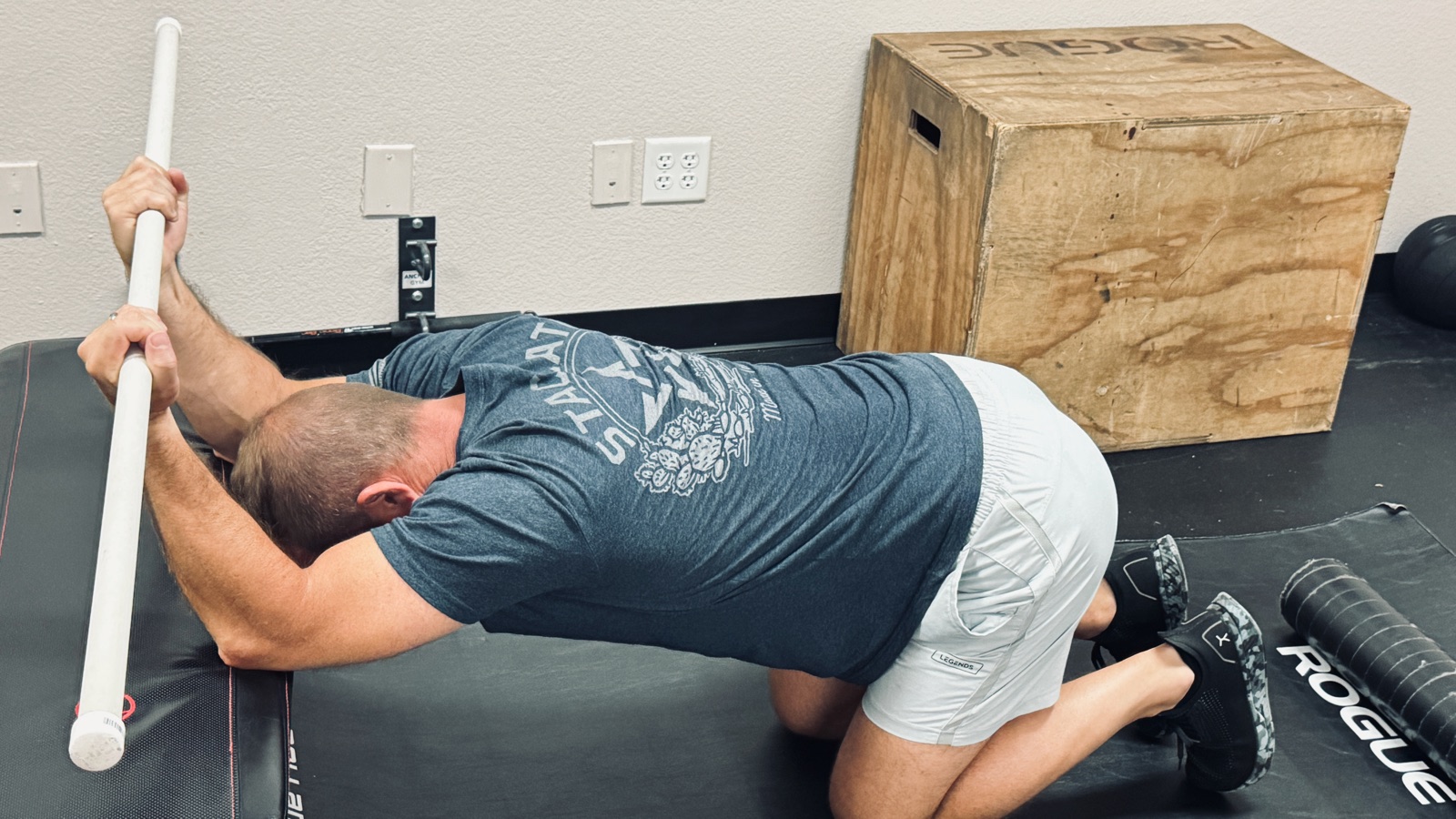
Then you build it. This is the part most people skip, and it’s the part that matters long term:
-
Deep neck flexor training, starting with a small, controlled chin nod lying down and progressing to holding that control while you turn your head and move your arms
-
Upper-back and shoulder blade strength, so your neck isn’t doing the upper back’s job
-
Rotation work that ties your neck, upper back and trunk together. For golfers, we connect that to how you turn in the swing, with the goal of a more comfortable, controlled rotation
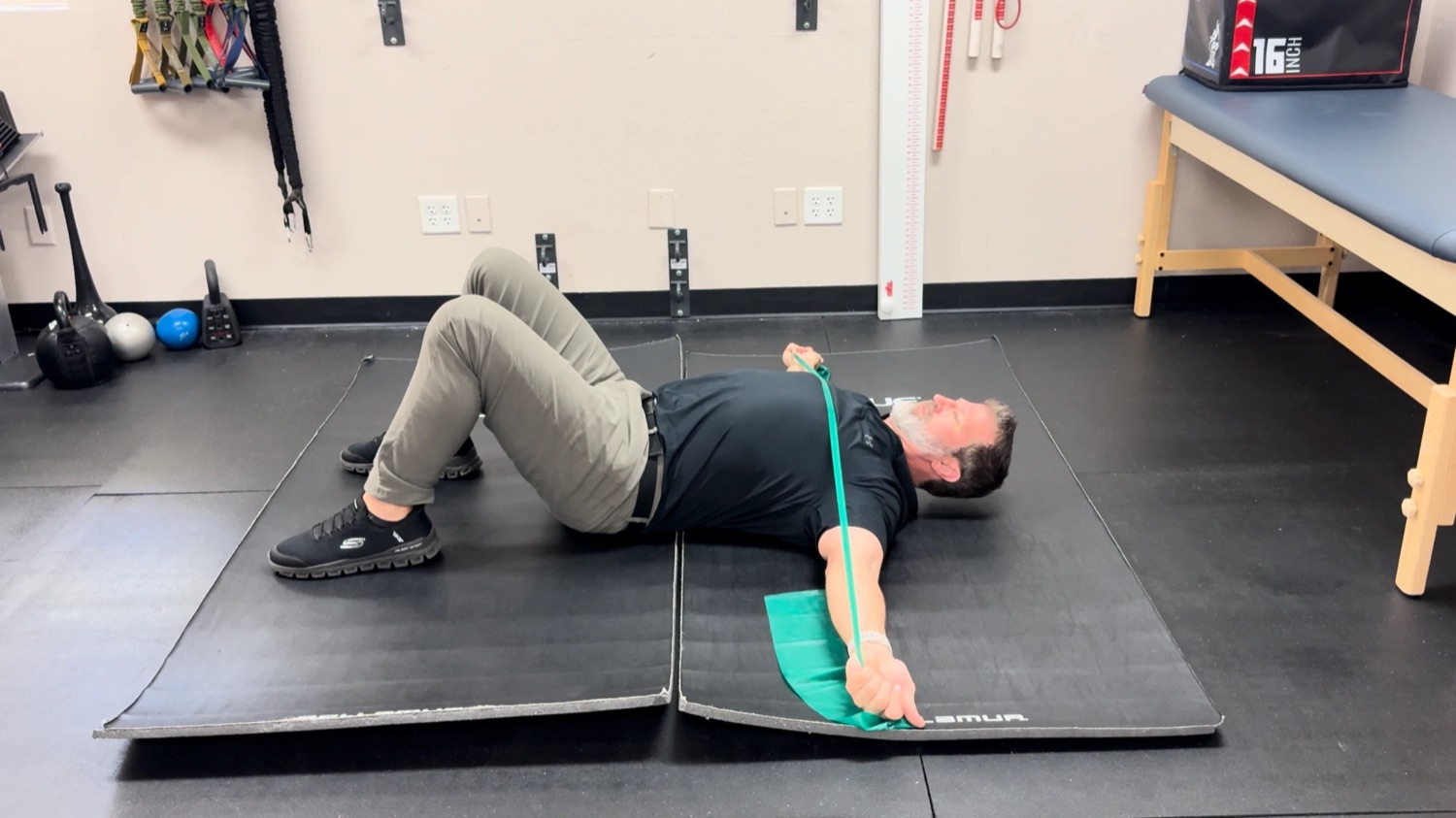
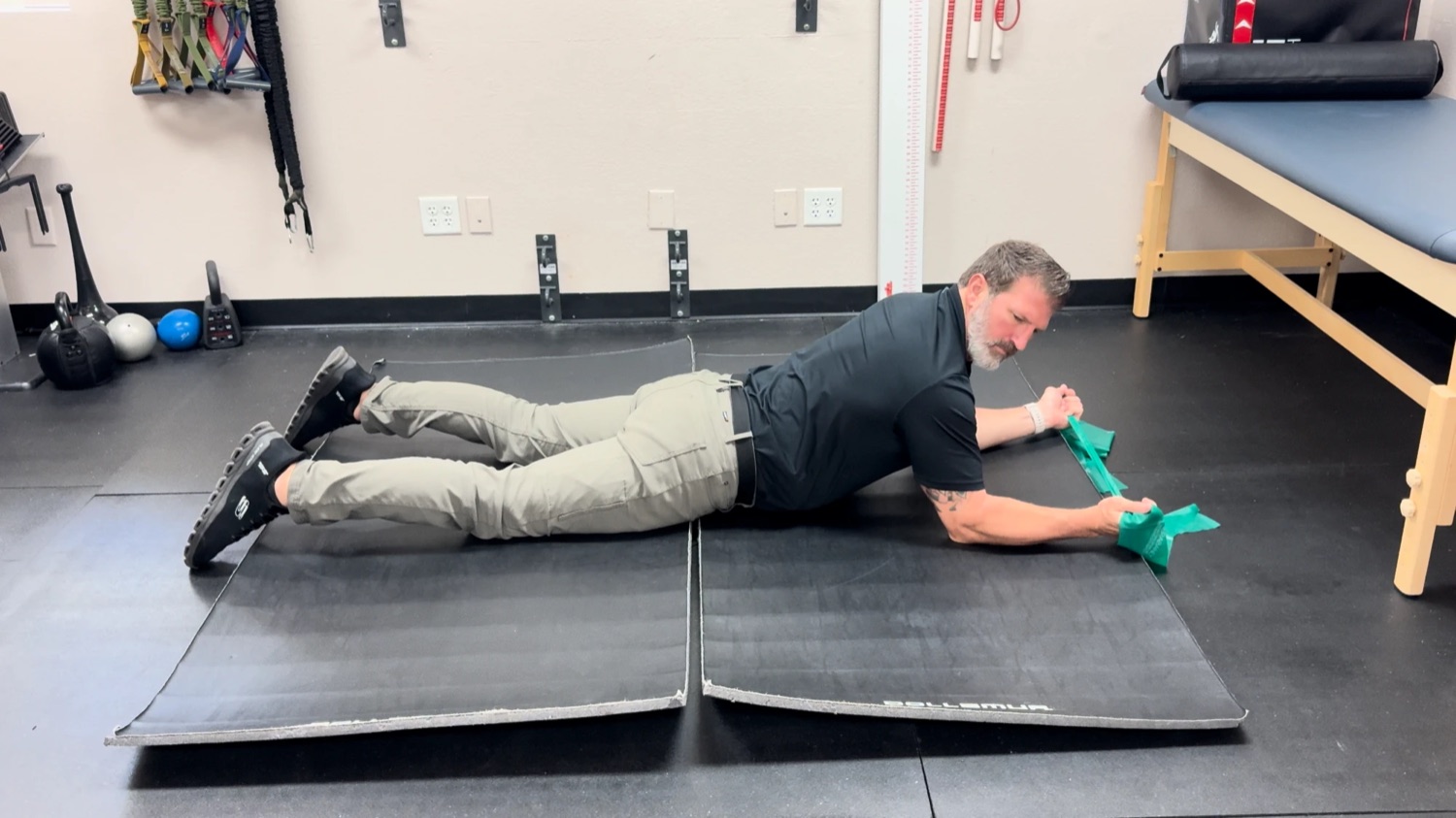
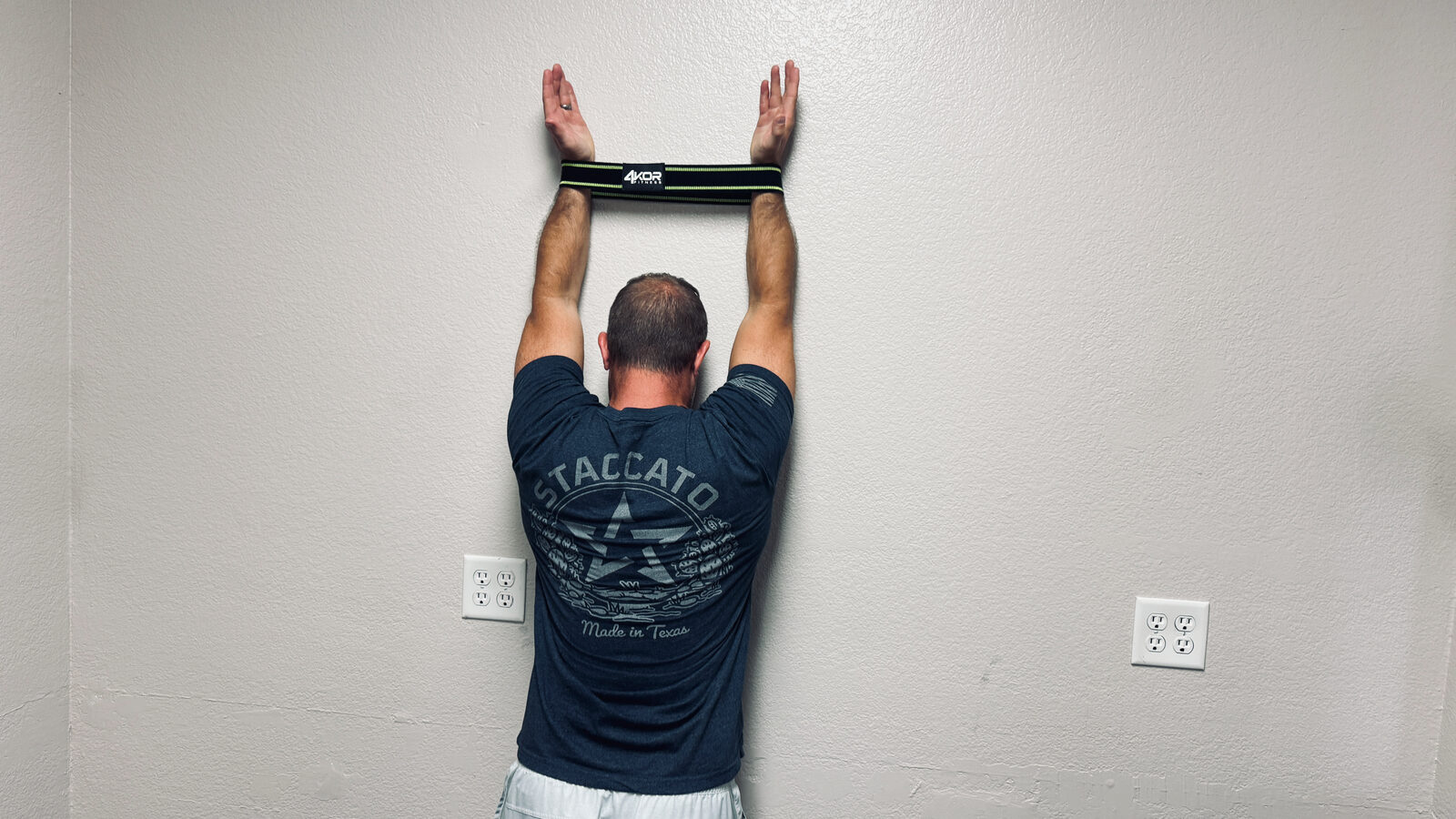
Research suggests manual therapy and targeted exercise may help some people with headaches that come from the neck. The evidence varies from study to study, it doesn’t help everyone, and results aren’t guaranteed. That’s why we track how often your headaches come, how strong they are and what you can do, rather than assuming a treatment is working. The goal: pain relief first, lasting control after.
We’ll also talk about the stuff outside the clinic: how you sit at your desk, how you sleep, how often you break up long drives or study sessions. Small changes there can take real load off the neck.
Warning signs: when a headache or neck pain needs a doctor
Some headaches are emergencies, not neck problems. And some serious problems can feel like neck pain. Check these warning signs before you treat a headache as a neck problem, try neck exercises or book neck care.
Emergency
Call 911 or go to the ER now if you have any of these:
- A sudden, severe headache that reaches full strength within an hour, and especially one that peaks within seconds to a minute (a “thunderclap” headache), even if it starts to ease
- After a head injury: a headache that gets worse and does not go away, repeated vomiting, confusion, unusual drowsiness, loss of consciousness, or other new neurological symptoms
- New or sudden neurological symptoms: weakness or numbness on one side, a drooping face, slurred speech, trouble finding words, new double vision or vision loss, sudden loss of balance, or confusion
- A new, unusual or severe one-sided headache or neck pain, especially after an injury or a sudden neck movement, or with a drooping eyelid, unequal pupils or new dizziness. Rarely, a tear in an artery in the neck can start with head or neck pain alone, even without an injury or any other symptoms
- Fever with a stiff neck, especially with a rash, confusion or vomiting
- A severe or unusual new headache during pregnancy or after delivery, especially with vision changes, high blood pressure or swelling
- Sudden vision loss, or a painful red eye with headache
| Warning sign | What to do |
|---|---|
| Other warning signs: see a doctor promptly | |
| Headaches that start after age 50 | See your doctor promptly. Same day if it comes with scalp tenderness or jaw pain when chewing |
| A headache after a head injury, without the emergency signs listed above | Get medical advice promptly to check for a concussion or other injury |
| Headaches that are new, or clearly different from your usual pattern | See your doctor promptly |
| Headaches that keep getting worse, or wake you from sleep | See your doctor promptly |
| Headaches with unexplained weight loss, a history of cancer, or a weakened immune system | See your doctor promptly |
| Headaches brought on by coughing, straining or exercise, or that change a lot when you lie down or stand up. If a headache starts suddenly and severely, follow the emergency instructions above instead | See your doctor promptly |
None of these are things to “work out” at a chiropractor’s office. We screen for them at every evaluation, and if we see them, we send you to the right place first.
Could your neck be contributing to your headaches?
If your headaches come with a stiff neck, sit on one side, and show up after long hours at a desk, in the car or on the course, it’s worth getting checked.
At Taylor Made Integrative Therapy on Camp Bowie West in Fort Worth, we’ll screen you, test your neck and upper back, and tell you straight whether this looks like something we can help with or something your doctor needs to see. If your exam supports neck-focused care and it’s safe to start, you can begin treatment on your first visit.
Book Your Initial Evaluation →Prefer to talk first? Call or text (817) 523-9590.
This article is general education, not a diagnosis. If you have any of the emergency signs above, call 911 or go to the nearest emergency room.

Dr. Taylor is a TPI-certified sports chiropractor at Taylor Made Integrative Therapy in Fort Worth, TX. He helps golfers, athletes, and active adults move better, feel better, and perform at their best — by fixing the movement issues underneath the pain. More about Dr. Taylor →