
You're hurting, but you're still playing. Maybe it's a lower back that tightens up by the 14th hole, an elbow that barks on every wedge shot, or a hip that's been nagging you since spring. You know you should get it looked at. But when you read "power and strength testing" on a golf assessment page, a reasonable thought pops up: that sounds like exactly what's going to make this worse.
Fair concern. Here's the honest answer: if you come in hurting, we don't run that version of the screen. The assessment changes — and the version you get is built specifically for a body that's in pain.
What a standard golf assessment looks like
When a healthy golfer comes in for a body-swing assessment, we test how the body moves through everything the golf swing demands — hip rotation, mid-back turn, balance, stability — plus power and strength testing to see what your body can produce, not just what it can reach. That full picture tells us where your swing is leaking speed and consistency.
It's a great screen. For a golfer in pain, parts of it are also the wrong tool. Asking an irritated back to produce maximum rotational power doesn't tell us anything useful — it just tells us your back is irritated. We already knew that.
What we do instead: find the source, not just the site
When pain is the problem, we swap the performance testing for a clinical movement assessment called the SFMA — the Selective Functional Movement Assessment. Plain English: instead of testing how much power you can produce, we break down your basic movements piece by piece to find where the problem actually starts.
That distinction matters, because the spot that hurts and the spot that's causing the problem are often two different places. A lower back that aches every round is frequently doing extra work because the hips or mid-back stopped rotating the way they should. The back is the victim, not the culprit. Treat only the back and the pain keeps coming back — fix the hips and the back finally gets a break.
The SFMA is how we sort that out systematically instead of guessing. Every movement is kept within what your body can comfortably do. Nothing in it is designed to push you into pain — it's designed to explain it.
What your first visit actually looks like
If you come in hurting, here's the sequence: we talk through your history and what golf does to the pain, run the SFMA to trace the problem to its source, and then start treatment that same visit — hands-on work to calm things down and get the restricted areas moving again.
Hands-on treatment is the start, not the finish. You'll leave with a short set of corrective exercises matched to what we found, because the lasting fix is rebuilding the movement and strength that let the problem build up in the first place. Pain relief is the first goal. Keeping it from coming back is the bigger one.
Performance testing isn't gone — it's just later
Once the pain is handled and your body is moving well again, that's when the power and strength testing earns its place. It becomes the fun part: now we're not working around a problem, we're building speed, distance, and durability on a body that's ready for it.
Plenty of our Fort Worth golfers come in for pain and stay for performance. The order just matters — you don't put a bigger engine in a car with a bent frame.
The bottom line
If you're hurting, you're not too injured to get assessed — you're exactly who the assessment is built to adapt for. You won't be pushed through power testing on a painful body, and you won't leave with a generic stretch sheet. You'll leave knowing where the problem actually starts and with treatment already underway.
Dealing with pain but still want to play? Tell us when you book and we'll run the version of the assessment built for it — then get you back to playing longer, stronger, and pain-free. Call (817) 523-9590 or book online.
Book Your Evaluation →Prefer to talk first? Call or text (817) 523-9590 or email info [at] tmitherapy.com.
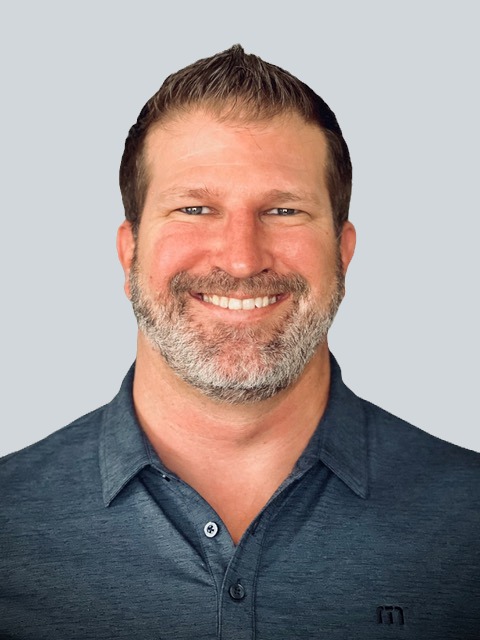
Dr. Taylor is a TPI-certified sports chiropractor at Taylor Made Integrative Therapy in Fort Worth, TX. He helps golfers, athletes, and active adults move better, feel better, and perform at their best — by fixing the movement issues underneath the pain. More about Dr. Taylor →