
You've probably heard a buddy mention they got a "TPI screen" before working with a coach or trainer. Maybe your swing coach recommended one. Or maybe you've just noticed your swing breaking down in the same frustrating way every single season, and nothing you've tried — more range time, YouTube fixes, a new driver — has actually changed it.
Here's the thing most golfers don't realize: a lot of swing faults aren't technique problems. They're body problems. And until you know what your body can and can't do, you're essentially trying to fix your car's alignment by swapping out the stereo.
That's where the TPI screen comes in.
At Taylor Made Integrative Therapy in Fort Worth, we use two TPI-certified assessment tools — the TPI Level 1 Physical Screen and the TPI Fitness Screen — to map exactly what your body is doing (and not doing), and connect those findings directly to what's happening in your swing.
What Is TPI, and Why Does It Matter for Golfers?
TPI stands for Titleist Performance Institute, and it's the gold standard in golf-specific human performance research. TPI has studied thousands of amateur and tour-level golfers to identify the physical patterns that show up most consistently in swing faults.
The core idea: your body dictates your swing. A golfer who can't rotate their thoracic spine will compensate somewhere else. A golfer with limited hip internal rotation will early extend — not because they're doing something wrong, but because their body has no other option. The goal isn't to critique your swing — it's to understand your body so we can remove the physical barriers that are holding your game back.
The TPI Level 1 Physical Screen: What It Tests
The Level 1 Physical Screen is a 16-point movement assessment that takes about 30–45 minutes in the office. Each test evaluates a specific movement that the golf swing demands.
Overhead Deep Squat: hold a club overhead and perform a deep squat. This reveals ankle dorsiflexion, hip flexion, thoracic extension, and shoulder mobility. When the club drifts forward, heels come up, or your torso collapses, we get our first read on where the compensations are.
90/90 Hip Internal and External Rotation: limited hip internal rotation is one of the most common findings in Fort Worth golfers — and it has a direct line to early extension. When your trail hip can't rotate internally through impact, your hips thrust toward the ball instead of rotating through.
Pelvic Tilt and Rotation: can you isolate your pelvis from your upper body? Golfers who struggle here can't dissociate the lower body from the upper body in the swing, limiting power and contributing to S-posture or C-posture.
Torso Rotation (Seated): this isolates thoracic spine mobility. Limited thoracic rotation is a leading contributor to reverse spine angle and a major driver of lower back pain — the number one injury complaint we hear from amateur golfers.
Lat Length: tight lats limit club plane and restrict thoracic extension and shoulder external rotation, often showing up as across-the-line positions at the top.
Single-Leg Balance and Stability: golf is a single-leg sport at impact. Poor balance shows up as swaying or sliding — both rob you of solid contact.
Lower Quarter Rotation: combined mobility of hips, pelvis, and lower lumbar spine. Asymmetries between left and right are a red flag for swing asymmetry and elevated injury risk.
The full screen also tests wrist hinge, elbow range of motion, cervical rotation, and other position-specific assessments. By the end, we have a detailed physical profile mapped directly to TPI's swing fault database.
The TPI Fitness Screen: What It Adds
While the Level 1 Screen shows us what your body can and can't move, the Fitness Screen tells us why — and gives us a clear picture of your power, strength, and where your compensations are likely coming from. It's built around two pillars: power and strength.
Power Testing is measured four ways: a vertical jump (lower body power), a medicine ball chest pass (upper body power), a medicine ball sit-up and throw (core power), and a rotational shotput throw (rotational power). These tell us how explosively your body can produce and transfer force.
Strength Testing is assessed through a split squat (lower body) and push and pull tests (upper body). This matters because power = strength × speed. If your power numbers are low, the next question is why. If strength is also low, that's where we start. If strength is fine but power is low, the issue is speed and elastic energy — a completely different training target.
What the pattern tells us about your swing:
- If you're upper body dominant — strong up top but limited below — you'll tend to see compensations like coming over the top or an early cast. The arms take over because the lower body isn't doing its job.
- If you're lower body dominant — powerful from the hips and legs but weak up top — we'll look for early extension, hip hiking, or a breakdown in how you sequence the downswing.
What We Actually Find in Fort Worth Golfers
After screening golfers across all skill levels, some patterns show up repeatedly: limited hip internal rotation (trail side), linked to early extension; restricted thoracic rotation, contributing to reverse spine angle; weak or late-firing glutes, driving lower back strain and power loss; poor single-leg stability on the lead leg; and tight lats with limited shoulder external rotation affecting club path and plane.
The good news? These are all fixable. With the right combination of chiropractic care, corrective exercise, and mobility work, most golfers see meaningful improvement in their screen scores — and their ball-striking — within four to eight weeks.
What Happens After the Screen?
The screen is just the starting point. Once we have your physical profile, we build a targeted plan: joint manipulation and mobilization to restore range of motion, soft tissue work, and golf-specific corrective exercises you can take to the gym or do at home. We also communicate with your swing coach when needed — because the most effective approach aligns your physical work with your technique work. The goal is simple: remove the physical ceiling on your game.
If you've been grinding on your swing without results, a golf body assessment might be the missing piece. The screen gives you data — not guesswork. Book your TPI screen in Fort Worth today.
Book Your Evaluation →Prefer to talk first? Call or text (817) 523-9590 or email info [at] tmitherapy.com.
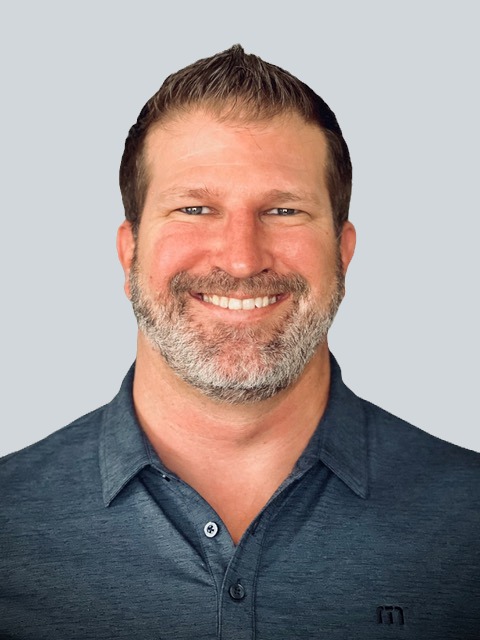
Dr. Taylor is a TPI-certified sports chiropractor at Taylor Made Integrative Therapy in Fort Worth, TX. He helps golfers, athletes, and active adults move better, feel better, and perform at their best — by fixing the movement issues underneath the pain. More about Dr. Taylor →