
You were hitting your 7-iron 165 yards five years ago. Now it's 150. Your driver, which used to fly 250 on a good day, is barely reaching 225 — and on the bad days, you'd rather not talk about it.
You've tried new equipment. You've watched swing videos until 1 a.m. Maybe you've taken a lesson or two. But the distance just keeps creeping away.
Here's the truth nobody's telling you: this isn't a swing problem. It's a body problem. And the good news is, it's a fixable one.
As a TPI-certified sports chiropractor in Fort Worth who works with golfers every week, I see this pattern constantly. The physical changes that happen in your 40s and 50s are predictable — and so are the swing faults they create. Once you understand the connection, you can actually do something about it.
What's Really Happening to Your Body After 40
You're Losing Thoracic Rotation
The thoracic spine — the middle of your back, roughly from your shoulder blades down to your lower ribs — is supposed to rotate. A lot. A full, powerful backswing requires somewhere between 45 and 55 degrees of thoracic rotation. If your thoracic spine isn't moving, something else has to, and that's where the trouble starts.
After 40, the joints between your thoracic vertebrae naturally stiffen. The muscles around them shorten and tighten from years of sitting, driving, and desk work. Most golfers I screen have significant restrictions through this region and have no idea — because the body is remarkably good at compensating, right up until those compensations start causing problems.
The swing fault this creates: Reverse Spine Angle (and a flattened shoulder plane). When your thoracic spine won't rotate fully, your body does what it has to do to get the club back — it tilts your upper body toward the target at the top of the backswing. It loads the lower back dangerously, makes a powerful downswing nearly impossible, and kills your ability to transfer energy through impact. You're not swinging less hard — you're leaking power at every joint on the way down.
Your Hips Have Gotten Stiff
The hips are the engine of the golf swing. A proper weight shift and downswing rotation require mobile hip joints that can internally rotate, externally rotate, and extend freely. After 40, the soft tissue around the hip capsule thickens and tightens. Recreational golfers — especially those who spend most of the day seated — often lose a significant portion of their hip internal rotation without ever noticing it off the course.
The swing fault this creates: Early Extension. When your hips can't rotate and clear properly in the downswing, they don't rotate — they thrust. The pelvis moves toward the ball rather than around toward the target, forcing your upper body to stand up and back away through impact. The club path becomes inconsistent, ground contact gets sloppy, and a big chunk of your power simply evaporates. Early extension is also one of the leading contributors to lower back pain in amateur golfers.
You're Losing Fast-Twitch Muscle Fiber
This one stings a little, but you need to hear it: starting in your late 30s and accelerating through your 40s, your body begins to preferentially lose Type II (fast-twitch) muscle fibers — the ones responsible for explosive, powerful movements. Exactly the kind required to generate club head speed.
Slow, steady movement doesn't train or preserve these fibers. What does? Explosive, power-based work: medicine ball rotational throws, resistance band speed drills, plyometric movements.
The swing fault this creates: Loss of Lag and Early Release. Without the explosive hip-to-torso sequencing that fast-twitch power enables, golfers over 40 tend to cast the club early from the top. You lose the whip effect that generates club head speed. Every 1 mph of lost club head speed costs you roughly 2.5 yards of carry distance — do that math across a 10-year decline and you'll see why the numbers add up fast.
Your Whole System Is Slowing Down
Beyond specific tissue restrictions, there's a broader neurological reality: reaction time slows, and the nervous system's ability to fire muscles in the precise, rapid sequence the downswing demands becomes less efficient. Your body still knows how to swing — it just can't execute as quickly. This isn't doom and gloom. It's physiology — and physiology responds to the right training stimulus.
What You Can Actually Do About It
Here's where most golf fitness content lets you down: it gives you generic stretching routines and calls it a day. That's not enough — and it can be counterproductive if you're stretching the wrong things or ignoring joint restrictions that no stretch will fix. Here's what actually works:
Get a Body-Swing Assessment
A body-swing assessment, built on the Titleist Performance Institute (TPI) model, is a 16-point physical screen that maps your body's movement limitations directly to your swing faults. It's not guesswork — it's a systematic process that identifies exactly which physical restrictions are affecting your game. Most golfers come in thinking they have a technique problem and leave realizing they have a mobility and strength problem that no amount of lessons would have solved.
Chiropractic Care Targeted at Golf Mechanics
Manipulation and mobilization of the thoracic spine can restore rotation that's been restricted for years. Hip joint mobilization can break through capsular tightness that's been driving early extension. This isn't general back cracking — it's specific, targeted work on the segments that matter most for your golf swing.
A Mobility Program You'll Actually Do
Not 45 minutes of stretching at 6 a.m. A focused 10–15 minute routine that targets thoracic rotation, hip internal rotation, and hip extension — the three areas that matter most for distance. Consistency beats intensity here.
Power-Specific Strength Training
This means training for speed, not just strength. Rotational medicine ball throws. Band-resisted hip turn drills. Single-leg stability work. These are the movements that preserve and rebuild fast-twitch fiber and teach your nervous system to fire in the right sequence.
The Bottom Line
Losing distance after 40 is common. It is not, however, inevitable — at least not to the degree most golfers accept. The real culprits are physical: thoracic stiffness driving reverse spine angle, hip restrictions creating early extension, and fast-twitch muscle loss robbing you of club head speed. Fixing the swing without addressing the underlying physical limitations is like treating the symptom while ignoring the cause.
The golfers who maintain — or even gain — distance into their 40s and 50s aren't just genetically lucky. They understand what their body needs and address it directly. If you're ready to stop guessing, a body-swing assessment is the logical first step.
Ready to play longer, play stronger, and recover faster? Schedule a body-swing assessment at Taylor Made Integrative Therapy in Fort Worth, TX. Start treatment on your first visit.
Book Your Evaluation →Prefer to talk first? Call or text (817) 523-9590 or email info [at] tmitherapy.com.
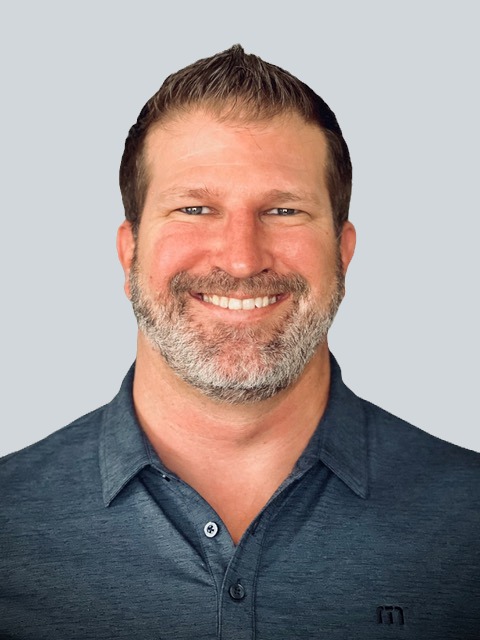
Dr. Taylor is a TPI-certified sports chiropractor at Taylor Made Integrative Therapy in Fort Worth, TX. He helps golfers, athletes, and active adults move better, feel better, and perform at their best — by fixing the movement issues underneath the pain. More about Dr. Taylor →